Politics
Transportation Advocates Say There’s Plenty of Benefits to Lowering Chicago’s Speed Limit to 25 MPH
Some city officials want Chicagoans to slow down.
Ald. Daniel La Spata (1st Ward) is proposing to reduce Chicago’s citywide speed limit from 30 mph to 25. Advocates of the ordinance say the small change could significantly curb the amount of traffic injuries and fatalities, and improve public safety. However, some raise concerns over enforcement, practicality, economic drawbacks and question whether the measure is really an attempt to increase revenue through higher traffic fines.
Chicago isn’t the first city to consider a 25 mph measure. Surrounding municipalities like Evanston, Wheaton and Aurora have all adopted that speed, as have major cities such as New York, Los Angeles and Washington D.C., which resulted in a decrease in traffic accidents.
“We have to take a comprehensive approach for this,” said W. Robert Schultz III, campaign organizer at Active Transportation Alliance. “With a universal, lower speed limit there’s no more guessing and it makes it safer for people both inside the car and outside the car.”
Schultz, who works on issues related to pretextual traffic stops and racial profiling, has concerns about the equitable enforcement of the new limit. Black and Latino communities are uniquely affected by road dangers, as they typically have longer commute times for jobs, education, and recreation.
“We want to make sure that fines help people change their behavior and not be an economic burden such that they’re driven into debt,” Schultz said.
Traffic fatalities have been on the rise nationwide since 2014, with a significant spike during the pandemic.
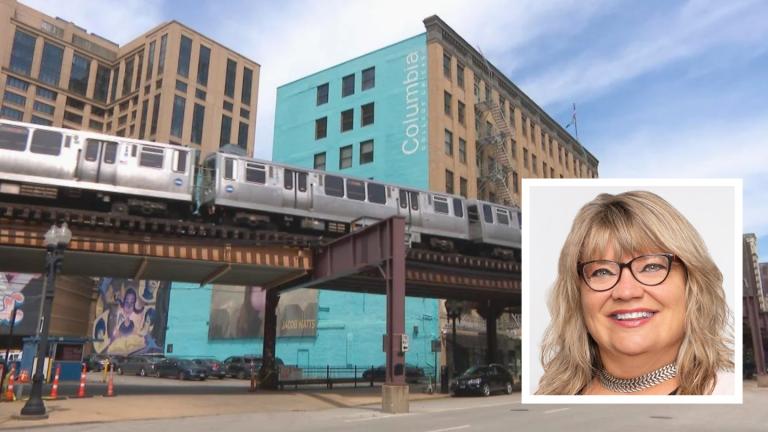
“It’s a combination of people being more reckless and speeding,” said Audrey Wennink, senior director at the Metropolitan Planning Council. “We’ve seen behavior get a lot worse during COVID and it stayed worse. 40% of all the fatalities and serious injuries in our region are related to speeding and aggressive driving.”
According to statistics by the Metropolitan Planning Council, a pedestrian struck by a vehicle traveling at 30 mph has a 60% chance of survival. Reducing the speed to 20 mph increases the survival rate to 80% or more. Wennink emphasizes that, “When cars go faster, the crashes are more severe and the chance of death is greater.”
Road and traffic design also play a crucial role in enhancing safety, says Wennink. Modernizing signals and redesigning roads to accommodate pedestrians and bikers are essential steps needed to accompany the speed limit reduction.
Another factor is how much wider, taller and heavier cars have gotten in recent years, which has worsened visibility for drivers and increased the severity of accidents.
“Pedestrians often get hit in the chest, and that’s more harmful,” Wennink said.
Reducing speed limits can give drivers more time to react, improve their field of vision, and shorten stopping distances.
Note: This story has been updated to correct the spelling of Audrey Wennink.